Effective Fumigation Services Methods: Pest Control & Prevention Guide
Learn the most effective fumigation services methods, including chemical treatments, gas fumigation, and preventive techniques for long-term pest control.
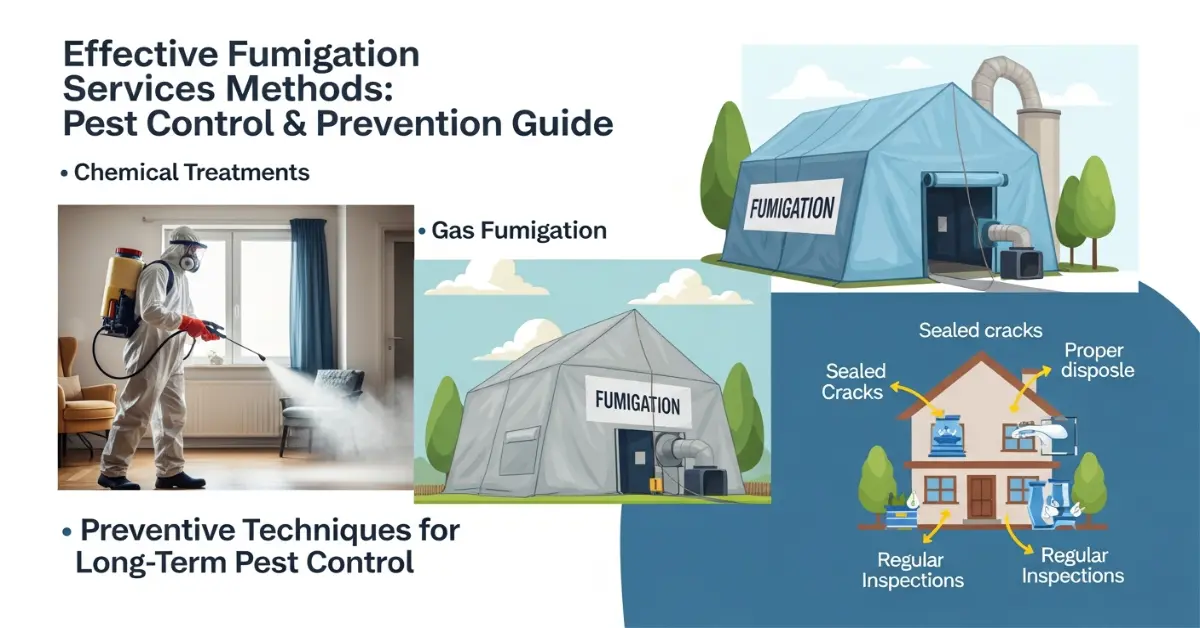
Effective Fumigation Services Methods for Complete Pest Control
Fumigation is a highly effective method of controlling pests in homes, warehouses, commercial buildings, and agricultural storage areas. Effective fumigation services methods ensure the complete eradication of insects, rodents, termites, and other pests that can damage property or contaminate food.
Unlike conventional pest control methods, fumigation uses gaseous chemicals that penetrate deep into hard-to-reach areas, eliminating pests in all life stages, including eggs. Proper fumigation requires specialized equipment, expert knowledge, and strict safety measures.
What Is Fumigation and Why It’s Important
Fumigation is the process of using gaseous chemicals to eliminate pests from an enclosed area. Unlike sprays or baits, fumigants penetrate every corner, killing pests hidden in cracks, furniture, and storage areas.
- Complete eradication of pests, including eggs and larvae
- Protection of stored products and property
- Prevention of pest-borne diseases
- Long-term reduction of infestations
Common Pests Treated by Fumigation
- Termites
- Rodents
- Cockroaches
- Bed bugs
- Stored product pests (grain beetles, moths)
Fumigation Services Methods Explained
Fumigation services are broadly classified into chemical, gas-based, eco-friendly, and preventive methods. Combining multiple approaches ensures effective and long-lasting pest control.
Chemical Fumigation Methods
- Liquid Chemicals: Applied as vapor or fog to penetrate cracks and crevices; effective against cockroaches, bed bugs, and termites.
- Aerosols and Sprays: Localized treatments for small infestations; quick but limited in reach.
Gas Fumigation Techniques
- Tent Fumigation: Entire buildings are sealed and filled with fumigant gases such as phosphine or sulfuryl fluoride.
- Chamber Fumigation: Used for grains, goods, and commodities in sealed chambers, ideal for warehouses and exports.
Eco-Friendly Fumigation Methods
- Heat Treatment: High temperatures kill pests and eggs without chemicals.
- Carbon Dioxide Fumigation: Non-toxic gas suitable for sensitive items and organic produce.
Physical and Preventive Strategies
- Proper food and grain storage
- Sealing cracks and entry points
- Regular cleaning and sanitation
- Moisture control to prevent termites
- Early pest monitoring
Safety Precautions During Fumigation
- Evacuate people and pets during fumigation
- Use proper protective equipment
- Ensure ventilation after treatment
- Follow chemical label instructions strictly
- Restrict access to fumigants
Professional vs DIY Fumigation
| Factor | Professional | DIY |
|---|---|---|
| Effectiveness | Very High | Moderate |
| Safety | High | Risky |
| Equipment | Specialized | Basic |
| Long-Term Results | Yes | Limited |
Choosing the Best Fumigation Service Method
The best fumigation method depends on the pest type, infestation severity, treated area, safety requirements, environmental concerns, and budget. In most cases, combining fumigation with preventive strategies delivers the most effective and long-lasting pest control results.