Effective Ant Control Methods: Prevention, Treatment & Long-Term Solutions
Explore proven ant control methods, including natural remedies, chemical treatments, and prevention tips to keep homes ant-free long term.
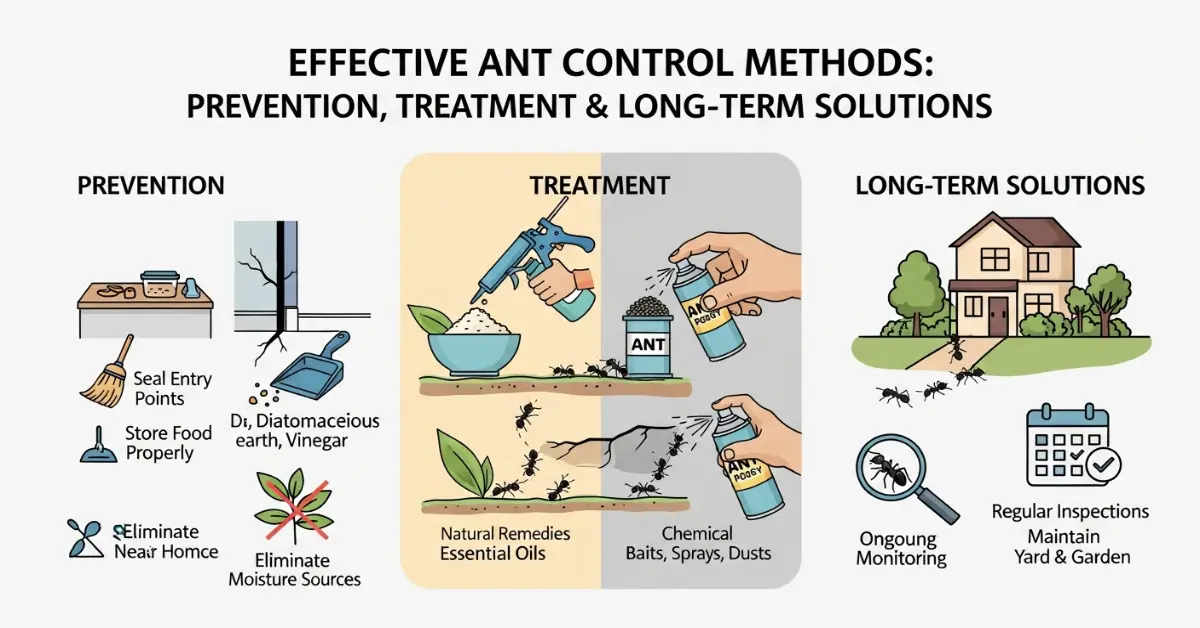
Effective Ant Control Methods for Homes and Commercial Spaces
Ants are among the most common household pests, often invading kitchens, bathrooms, gardens, and storage areas in search of food and water. While a few ants may seem harmless, a persistent infestation can quickly grow into a major nuisance, contaminating food and damaging property. Effective ant control methods are essential to eliminate colonies and prevent recurring invasions.
Ant control is not just about killing visible ants. These insects live in large colonies, often hidden behind walls, under floors, or outdoors near buildings. If the nest is not eliminated, ants will continue to return. Modern ant control methods focus on colony elimination using bait systems, chemical treatments, natural repellents, and long-term preventive measures.
What Are Ants and Why Are They a Problem?
Ants are social insects that live in colonies consisting of workers, soldiers, and a queen. Worker ants forage for food and leave scent trails that guide others to the same location, which is why ants often appear in large numbers.
Some species, such as carpenter ants, can damage wooden structures, while others contaminate food and surfaces. Their adaptability and rapid reproduction make proper ant control methods essential in both residential and commercial environments.
Common Types of Ants Found Indoors
- Sugar ants
- Carpenter ants
- Pharaoh ants
- Fire ants
- Odorous house ants
Ant Control Methods Explained
Ant control methods generally fall into five main categories:
- Chemical treatments
- Ant bait systems
- Natural and eco-friendly solutions
- Physical and mechanical control
- Preventive management
Chemical Ant Control Methods
- Residual Insecticide Sprays: Applied to entry points, baseboards, and cracks to kill ants on contact.
- Dust Insecticides: Effective in wall voids, under floors, and hidden nesting areas.
Ant Bait Control Techniques
- Worker ants carry bait back to the nest
- Poison spreads throughout the colony
- Eliminates the queen and stops reproduction
- Bait works best when other food sources are limited
Natural and Eco-Friendly Ant Control Methods
- Vinegar and Lemon Juice: Disrupt scent trails and repel ants naturally.
- Boric Acid: Highly effective when mixed with sugar bait.
- Essential Oils: Peppermint, tea tree, and eucalyptus oils deter ants.
Physical and Mechanical Ant Control
- Sealing Entry Points: Caulking cracks and gaps blocks access.
- Traps: Used mainly to monitor activity levels.
- Cleaning and Sanitation: Removes food sources and scent trails.
Preventive Ant Control Strategies
- Store food in airtight containers
- Clean spills immediately
- Fix water leaks
- Remove outdoor nests near buildings
- Keep gardens trimmed
- Seal doors and windows
Professional vs DIY Ant Control
| Factor | Professional Control | DIY Control |
|---|---|---|
| Effectiveness | High | Moderate |
| Cost | Higher | Lower |
| Safety | Expert handling | Depends on use |
| Long-Term Results | Yes | Limited |
Choosing the Best Ant Control Method
The best ant control method depends on the ant species, infestation size, location, and safety concerns. Ant bait systems combined with preventive measures offer the most reliable and long-lasting solution for controlling ant infestations.